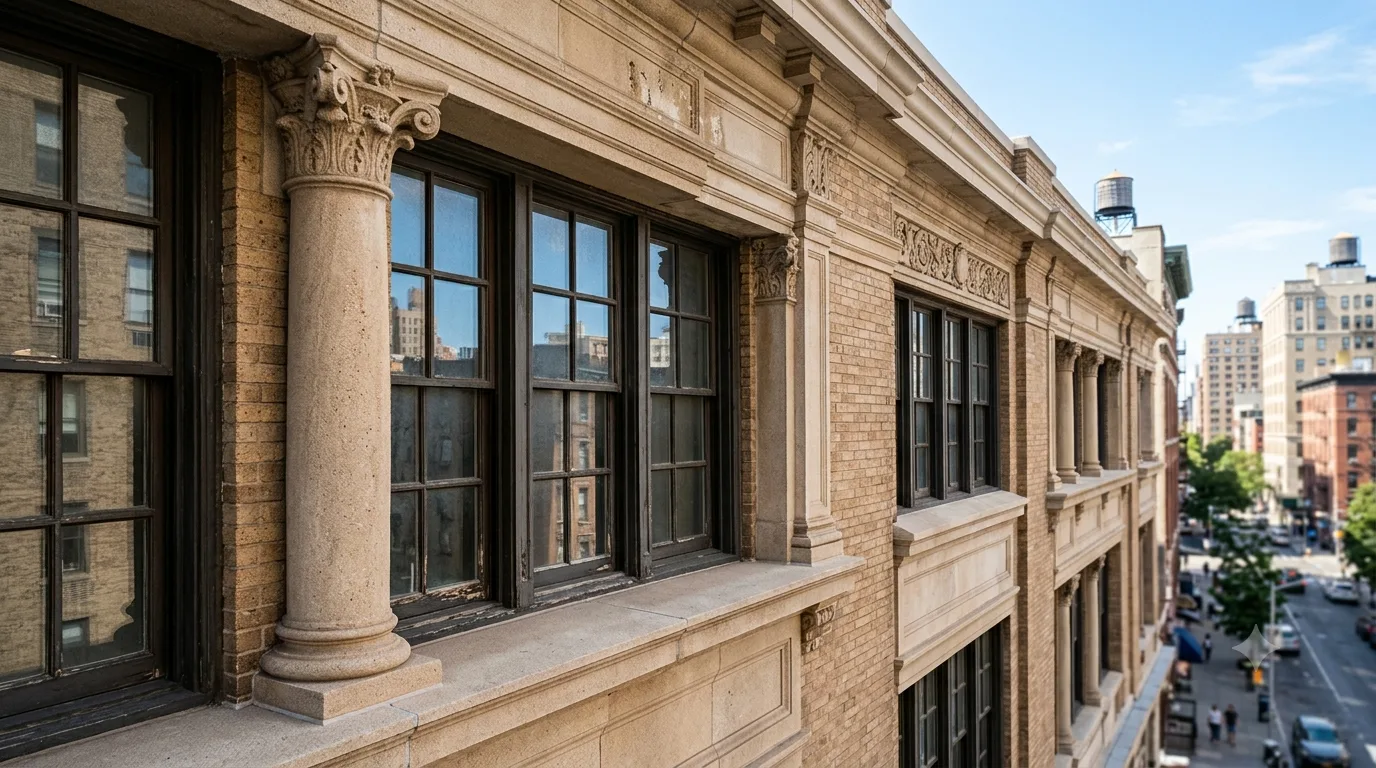

Keystones and lintels do two jobs at once: they carry load away from an opening and they crown windows and doors with classical detail. In cast stone, these elements combine structural function with the carved look of natural limestone — at a practical cost.
What a lintel does
A lintel is the horizontal element that spans the top of a window or door opening. It carries the weight of the wall above and transfers it to the masonry on either side, so the opening stays sound. Lintels can be structural, decorative, or both.
What a keystone does
A keystone is the central wedge-shaped stone at the top of an arch or the middle of a flat lintel. Structurally it locks the arch; decoratively it is a focal point, often carved or projecting. Keystones give an opening a finished, formal character.
Common applications
- Flat or arched lintels over windows and doors
- Keystones at the crown of arches and flat arches
- Combined lintel-and-keystone assemblies for a traditional look
Structural considerations
Cast stone lintels can be reinforced and engineered to carry load, backed by stamped engineering calculations, or used as a decorative face over a structural steel or concrete lintel. The right approach depends on the span and the wall above.
Matching and restoration
On restoration projects, deteriorated lintels and keystones are color-matched to the existing limestone or brownstone and cast to the original profile, so the repair blends with the facade. See our overview of cast stone for the full material picture.
Specify keystones and lintels
Send us your drawings and we will prepare shop drawings and a quote. Request a quote from Mohan's Precast.