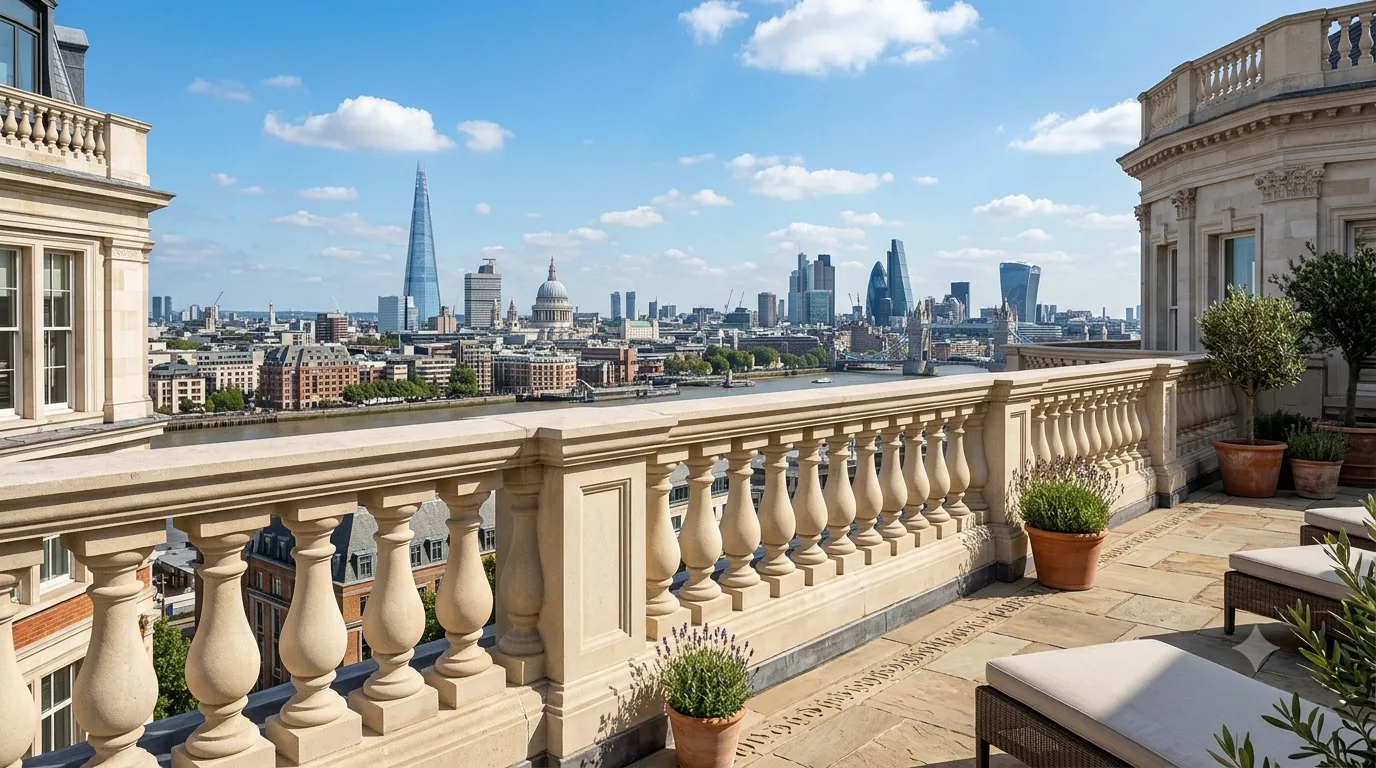

Matching new cast stone to a historic facade is what lets a replacement piece disappear into the original. On NYC's limestone and brownstone buildings — many a century old — a good match is the difference between an invisible repair and an obvious patch. Here is how cast stone is matched to historic masonry.
Start with a sample
The best match starts with a physical sample of the original stone, or at minimum detailed, color-accurate photos. The sample reveals the true color, texture, and grain that the new mix must reproduce.
Tune the mix
From the sample, the manufacturer adjusts the three levers of cast stone color — white or grey cement, mineral oxide pigments, and aggregates — plus the surface texture. For a dry-tamp finish, the texture reads very much like fine cut limestone. See our guide on choosing cast stone color for more.
Capture the profile
The element's exact profile and dimensions are captured from a template, the original piece, or field measurements, and turned into shop drawings and a custom mold. A faithful profile is as important as color for an invisible repair.
Approve a sample piece
- A sample piece is produced before full production
- It is reviewed against the original, ideally on site and in daylight
- The mix is refined until the match is approved
Plan for aging
Both the new and existing stone will continue to weather. A thoughtful match considers how the pieces will age so the facade stays unified over time.
Match your facade
Mohan's Precast specializes in matching cast stone for Local Law 11 restoration and historic facades across NYC. Request a quote and send us a sample to begin.