
NYC Local Law 11 inspections flag the same facade conditions over and over — and most of them involve deteriorated stonework. Knowing the common violations helps building owners plan repairs, and cast stone is the material that fixes them for good. For the full overview, see our Local Law 11 facade repair page.
How FISP classifies a facade
Under the Facade Inspection Safety Program, a Qualified Exterior Wall Inspector classifies each facade as Safe, SWARMP (Safe With a Repair and Maintenance Program), or Unsafe, with mandated timeframes for fixing unsafe conditions.
The most common violations
- Deteriorated parapet coping — the number-one source of water entry
- Cracked or spalling window sills and lintels
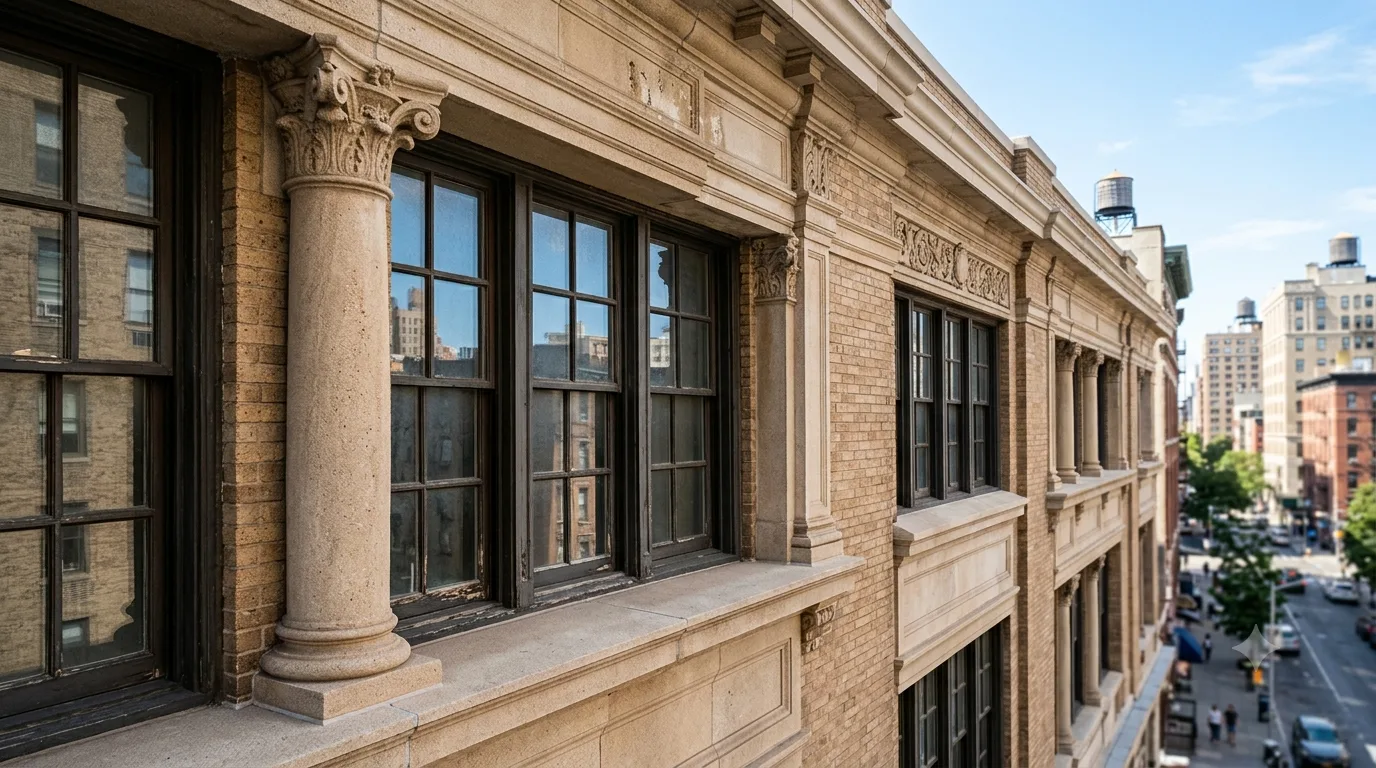
- Failed cornices, belt courses, and water tables
- Loose, displaced, or missing stone
- Open joints that admit water
Why these keep happening
Almost every one traces back to water. In NYC's freeze-thaw climate, water that gets into masonry freezes, expands, and causes spalling and displacement. Fixing the symptom without addressing water entry just delays the next violation.
How cast stone resolves them
Cast stone replaces the failed elements with dense, low-permeability units cast to the original profiles and color-matched to the facade. See how coping and parapet repair address the biggest culprits. Because cast stone resists water, the repair holds through future FISP cycles.
Plan your FISP repairs
Mohan's Precast is an NYC-approved manufacturer serving facade restoration across the five boroughs. Request a facade repair quote with your inspection scope.