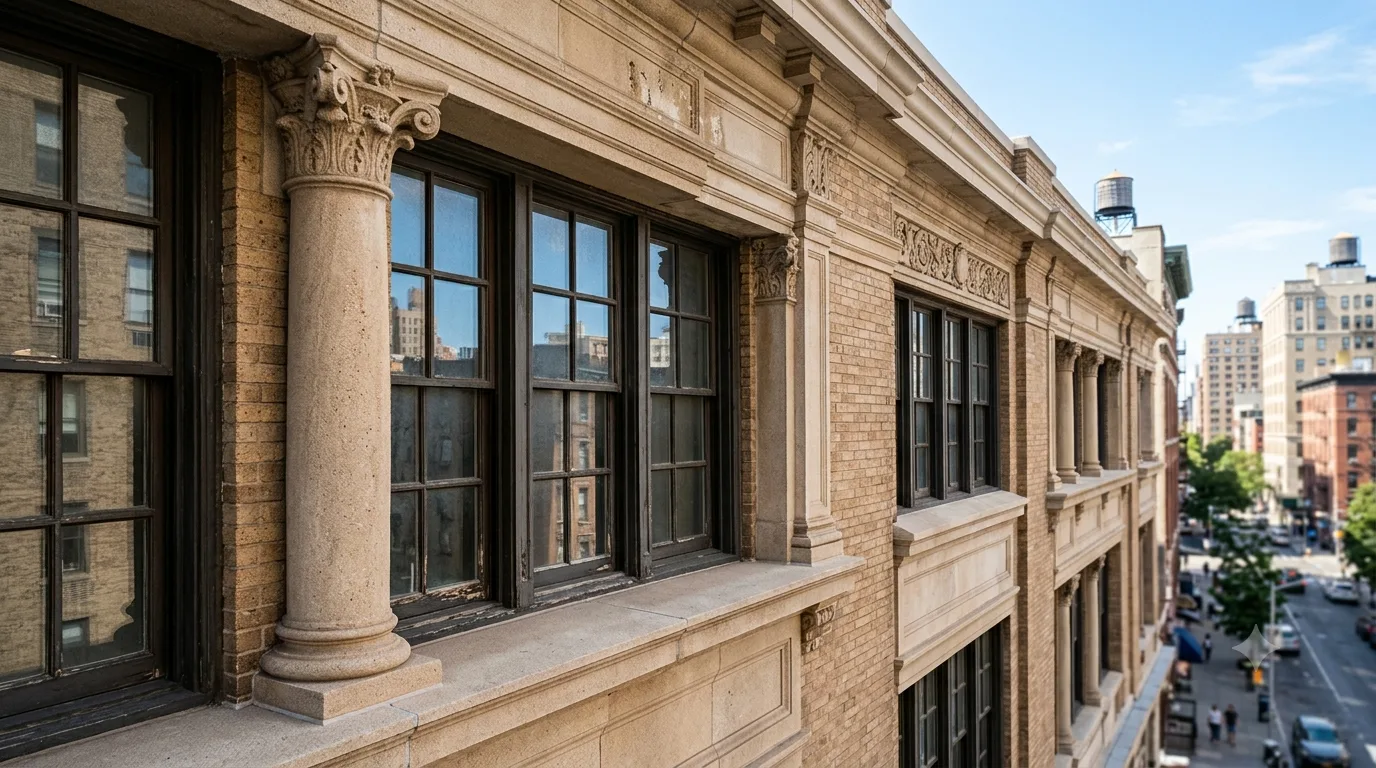

NYC's freeze-thaw cycles are the single biggest enemy of masonry — and the main reason dense precast concrete outlasts weaker materials. Understanding how freeze-thaw damage works explains why precast concrete and cast stone perform so well on city facades.
How freeze-thaw damage works
When porous masonry absorbs water and that water freezes, it expands by about nine percent. The expansion pushes the material apart. Thaw, re-wet, re-freeze — and over hundreds of cycles each winter, cracks grow, surfaces spall, and stones break. Soft sandstone and brownstone are especially vulnerable.
Why precast resists it
The key is permeability. Quality precast concrete and cast stone are dense and tightly compacted, so they absorb very little water. Less absorbed water means less ice, less expansion, and dramatically less freeze-thaw damage.
Design details that help
- Proper slopes and drip edges shed water instead of holding it
- Well-designed joints keep water out of the assembly
- Coping and projecting trim protect the wall below
Decades of service
Combine a low-permeability material with good water-shedding details, and you get a facade element that lasts 50 years or more with minimal maintenance — and holds up through repeated Local Law 11 cycles.
Build for the NYC climate
Mohan's Precast manufactures durable cast stone and precast concrete engineered for New York weather. Request a quote for your project.